Moth’s suspected diagnosis of corticobasal degeneration
The Salt PathMoth’s suspected diagnosis of corticobasal degeneration begins with a consultation Ray and Moth expect to resolve a physical problem and instead receive a prognosis that unsettles their whole shared future. The specialist could not confirm the disease during life, and no treatment could halt it; nevertheless, the possibility reorganized the couple’s understanding of time, work, family, and home. Its consequences unfold alongside their homelessness and their decision to keep walking, moving from shock and denial toward a difficult, provisional acceptance.
The consultation and provisional diagnosis
The appointment in Liverpool was the culmination of six years of medical visits prompted by pain in Moth’s shoulder and arm and a tremor in his hand. Earlier doctors had suspected Parkinson’s disease, later ruled out, or nerve damage. One had treated pain and stumbling as something he should expect. Ray and Moth nevertheless arrived hoping that the leading consultant would identify an injury, perhaps related to Moth’s fall through a barn roof, and explain how it could be repaired. After the court case and the exhausting work of packing, the seven-hour round trip felt like time taken from the home they were about to lose.
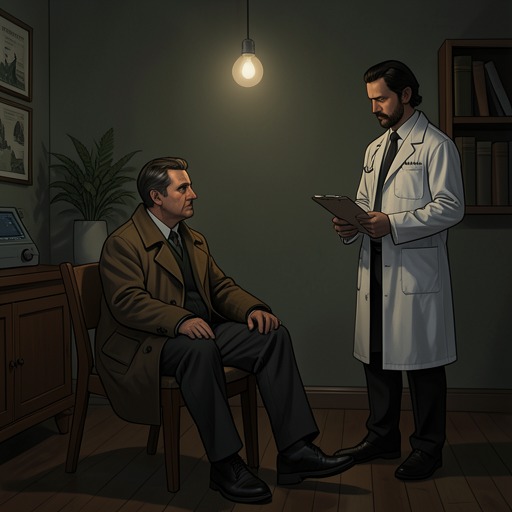
The consultation’s first warning was not a test result but a change in manner. In the familiar white room overlooking a car park, the consultant sat beside Moth instead of speaking from behind his desk, touched his arm, and asked how he was. After years of impersonal appointments, the gesture made Ray suspect that the news would be serious. The doctor then offered a diagnosis as the best thing he could do for Moth: he believed Moth had corticobasal degeneration, or CBD.
The diagnosis remained explicitly uncertain. The doctor explained that there was no test to establish CBD during Moth’s life; certainty would come only at post-mortem. He estimated six to eight years from the onset of symptoms, while noting that Moth’s progression appeared unusually slow because symptoms had already been present for six years. That combination of a grave prediction and unresolved uncertainty gave Ray no clear boundary between hope and impending loss. The doctor described a rare degenerative brain disease expected to impair Moth’s body and eventually his mind, with confusion and dementia, and possibly an inability to swallow that could lead him to choke on his saliva.
Shock, denial, and the threatened shared future
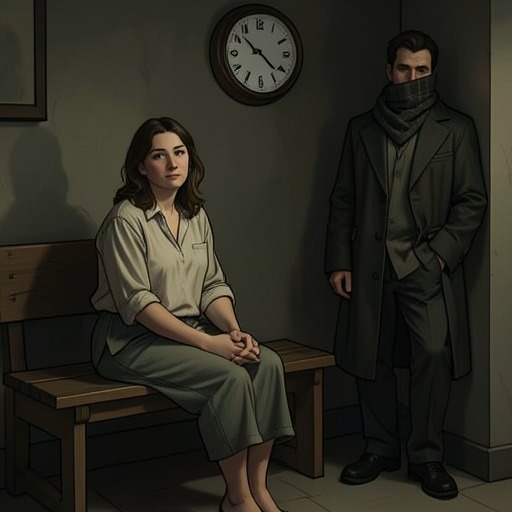
Ray’s first response was to reject the diagnosis. She insisted the consultant might be wrong, just as she thought the judge had been wrong. In the van outside the hospital, the couple clung to one another; Moth wept silently while Ray could not cry. Their physical closeness became an attempt to keep the news from making separation real. They understood their adult lives not as two independent stories but as one life made together, and had imagined growing old and dying together at ninety-five on a mountain after watching the sunrise. The prospect of Moth dying confused, unable to swallow, and apart from Ray replaced that shared ending with one neither could bear to contemplate.
There was little medical help to counter the prognosis. No drug could stop the disease or therapy keep it at bay. Pregabalin might ease Moth’s pain, but he was already taking it; physiotherapy was suggested for stiffness, though he already had a daily routine. Ray grasped at the possibility that doing more exercises might slow the disease, while recognizing that no one had offered a treatment capable of doing so. Their immediate exchange preserved denial as a temporary shelter: Ray and Moth tried to imagine that the consultant was mistaken so they could continue living as though the diagnosis were not real, even as Moth acknowledged that they might eventually reach the end stage the doctor had described.
The diagnosis arrived amid another rupture. The court case had left the couple without their house and holiday-rental business, and therefore without their income. Their children, Tom and Row, were students in shared accommodation and could not support them; Moth’s brother could offer his house only temporarily. Ray saw the practical demand to find work and rent somewhere, but feared that leaving Moth to work would consume the limited time they might have together in relative health. She wanted to preserve memories for the lonely future she imagined. The illness did not cause their homelessness, but it made ordinary solutions feel charged with the prospect of losing precious time as well as security.
Walking amid uncertainty
As Ray and Moth began their long walk, the disease remained a presence they could neither verify nor set aside. Ray had hoped that distance would give them room to think through their losses and imagine a future shaped by CBD. Instead, they often talked about food, heat, and rain, while Ray described moving forward in a blank, almost metronomic state. Watching Moth struggle brought a new fear: perhaps the journey was making him worse. The consultant had warned him not to tire himself, walk too far, or be careless on stairs, and Ray worried that proposing the trek had accelerated the illness. Her guilt and uncertainty coexisted with their need to move on after losing their home.
The couple’s housing crisis made continued movement both chosen and constrained. In early August, standing with their rucksacks on the roadside in Taunton, Ray understood that this was different from travelling with a home to return to: there was no door behind them. They took a bus to Minehead with only fifty pounds left, intending to use the South West Coast Path to give themselves a reason to keep moving and a way to shape a future. Later, after more than two hundred and fifty miles of pain, exhaustion, hunger, wild nights, and bad weather, they could have returned to Wales to seek council housing and a cheap winter campsite. Instead, they chose to walk on. At the visitor centre, wet and cold, Ray saw the decision as a form of freedom: they could choose whether to continue, rather than depend on relatives or risk wearing out their welcome.
The course of the walk did not settle whether the original prognosis was right. Later, when CBD felt temporarily held at bay, Moth knew it had not miraculously disappeared. Ray describes this interval through the image of a condemned person granted the right to appeal: not an acquittal, but a reprieve from living every moment under the shadow of death. Even during this reprieve, symptoms made the disease tangible. Moth told Ray that he sometimes woke unsure what he was supposed to do and had to remind himself to eat, drink, or go to the bathroom because he should, rather than because he wanted to. He asked whether this meant he was dying now. The question shows how ordinary acts of self-care had become evidence through which both of them tried to interpret an uncertain illness.
Family, death, and a changed understanding of time
The diagnosis also altered how Ray understood her responsibilities as a parent. In the darkness of the tent, she worried that she and Moth had discussed losing their house without speaking plainly to Tom and Row about his illness and what it might mean for the family. She had previously talked with them about every bump, scratch, and heartache, but found this subject too painful to approach. Moth told her that the children spoke frankly with him, understood that the illness affected him rather than them, and were strong. The conversation did not remove Ray’s fear that the family might be scarred; it showed that the disease was already changing their relationships and that silence had not meant the children were unaware.
Later, when the couple had enough distance from the immediate terror to speak about death, Moth told Ray he wanted to be cremated. Their earlier plan had been to be buried in a field on their farm, near a hedge with a view of the mountains. That place was no longer theirs, and Moth no longer felt he had a secure place where he could be left. He wanted Ray to keep his ashes until she died, so their children could bring them together and release them on the coast, in the wind, toward the horizon. The request turned the loss of the farm from a practical deprivation into a change in the couple’s imagined final resting place, while preserving their insistence on remaining together.
Ray’s response marks a change from the denial that followed the consultation. At the edge of Lyme Regis, in a tent pitched on grass between lobster pots and chalets, she recognized that death had now been acknowledged: Moth would fight, but would eventually lose. She could let the truth in without treating that acceptance as surrender in the present. In her account, the fragments of their lives began to draw together again, and life returned alongside the recognition of death. The diagnosis therefore remains neither a confirmed medical finding nor a story of cure. It is the uncertain sentence around which the couple repeatedly revise what they can hope for, how they can care for one another, and what it means to continue choosing a life together.